LED Light Bar Aquarium Explained: A UK Buyer's Guide
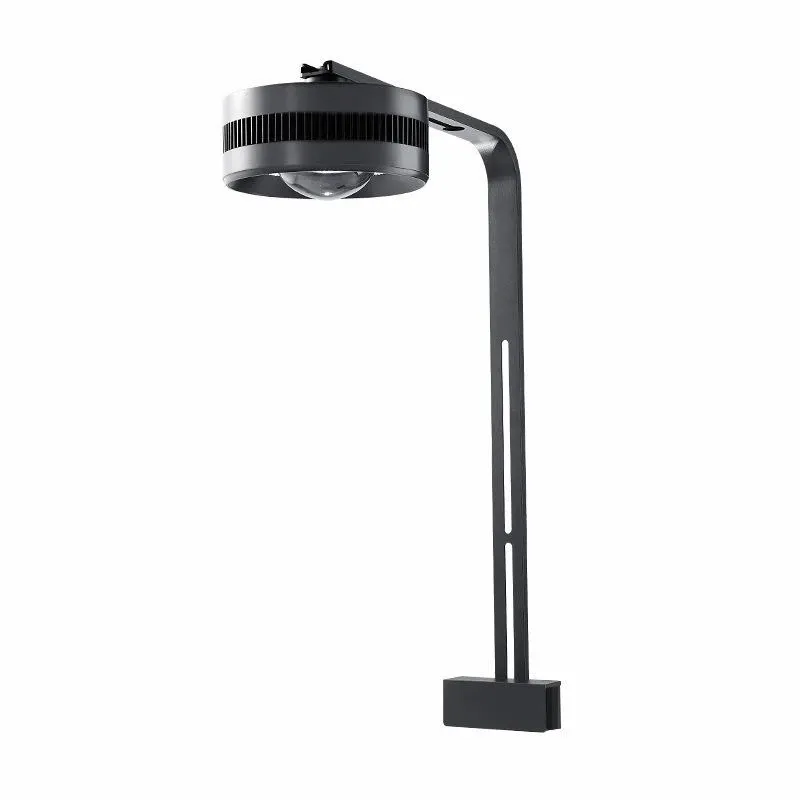
Short answer: a led light bar aquarium setup is a slim overhead LED fixture that gives broad, even coverage, efficient running and a clean open-top look. For most UK aquarists the right choice comes down to tank length, plant demand, the PAR that reaches the substrate, splash protection and how you mount it — not simply the brightest unit on the shelf.
If you have been running a clip-on lamp from a brand like Hygger or NICREW and your rimless tank still looks a little cluttered at the rim, you already know why aquascapers move to a suspended bar. Lifting the light off the glass and spreading it along the tank is the single change that makes an open-top layout look like the tanks you scroll past on UKAPS and Instagram.
What matters when choosing an LED light bar aquarium setup?
- Coverage over raw brightness: a bar spread along the tank gives even light edge to edge, without the dark corners a single clip-on leaves.
- PAR at the substrate, not just at the surface — a suspended bar you can raise or lower lets you tune intensity to your plants.
- Fit for UK homes: an IP67 splash rating, a BS 1363 plug, low heat and efficient running for daily use through the year.
What is an LED light bar for an aquarium?
An LED light bar is a slim linear fixture that lights the tank from above or across the rim. Compared with older fluorescent fittings it gives more even coverage, less heat, a longer life and better control over intensity and colour. Most modern bars sit in a narrow aluminium housing that helps disperse heat, and they either rest on adjustable legs across the glass or hang above the tank on cables for a floating look.
Why aquascapers swap a clip-on for a suspended bar
A clip-on lamp concentrates a cone of light — fine for a nano cube, but it clutters the rim and often cannot reach the corners of a 90cm tank. Suspending a bar above an open-top or rimless tank does three things at once: it removes the plastic clutter from the rim so attention stays on the hardscape and plants, it broadens the cone so coverage becomes even from front to back and edge to edge, and it gives that clean, contemporary look that suits a modern living room. For keepers upgrading from a hooded tank rather than a clip-on, our fish tank lid with light guide compares the two styles.
PAR and spectrum: what actually matters
When you choose a bar, PAR — the usable light for photosynthesis that reaches a given depth — tells you far more than wattage or lumens alone. As a rough guide, low-light plants such as Anubias and Java fern are happy with modest PAR, while demanding carpeting species need considerably more, along with balanced nutrients and CO². Because a suspended bar can be raised or lowered, it gives you real control over how much usable light reaches the substrate. Colour matters for how the tank looks: a neutral daylight balance around 6500K flatters fish without looking too blue — there is more on this in our full spectrum aquarium light guide.
Suspended, clip-on or lid-mounted?
Suspended overhead illumination usually wins for spread and access. If a bar sits directly on the rim the beam may not reach the corners; hung 10–30 cm above the water the cone broadens and coverage becomes noticeably more uniform. Raising the bar also makes feeding and trimming easier, and keeps the light off the glass for a cleaner look. A lid-mounted light is tidier and better for jumpy fish, but trades away some spread and access.
What size LED light bar do you need?
Match the bar to your tank length so light reaches both ends evenly — an undersized unit leaves dim ends, while an oversized high-output unit can be too intense on a shallow tank without demanding plants. On deeper tanks, check that the maker's PAR figure reflects usable output at substrate depth, not just surface brightness, because water reduces intensity with depth. If you keep a deep display tank and your carpet plants are struggling at the bottom, a suspended bar you can lower is often the most useful adjustment you can make.
Running costs, photoperiod and algae
LED bars generally use less electricity than older T5 or T8 tubes and hold their output for far longer, which matters for a light running daily through the year in a UK home. Keep the tank balanced by running a sensible photoperiod on a timer rather than leaving the light on all day; a steady 6–10 hours suits most tanks, and reducing hours is often the first fix when algae appears. Our aquarium light timer guide covers schedules and holiday cover in detail.
Installation and safety in the UK
Any equipment near water should be used with a residual current device (RCD), and the cable should form a drip loop so stray droplets fall away from the socket rather than running into it. Look for a splash rating suitable for an open tank — an IP67 rating is reassuring — and confirm the fixture ships with a proper BS 1363 UK plug rather than relying on a travel adapter.
The AQQA Lumina led light bar aquarium
The AQQA Lumina suspended LED is built for exactly this upgrade: a suspended full-spectrum bar with 6500K–10000K output, 45W of Epistar power and PAR 85 at 12 inches for even, edge-to-edge coverage. Adjustable stainless-steel suspension cables with a push-release let you set the height to tune intensity and lift the bar for maintenance, and the ultra-thin aluminium body runs silently with no fans. It is UKCA and CE certified with an IP67 splash-proof rating and a BS 1363 UK plug; cabinet mounting brackets are available separately. Rated 4.8 out of 5 from 351 reviews, it is £121.34 (RRP £182.01, 33% off), with free UK next-day delivery, a 12-month warranty and 30-day returns.
Ready for even, full-spectrum coverage over an open-top tank?
Shop the AQQA Lumina — £121.34Frequently asked questions
Is an LED light bar worth it for an aquarium?
For most modern UK freshwater tanks, yes. An LED light bar gives efficient daily running, even coverage without bulky hoods, better control over plant-friendly lighting and a cleaner look than older fluorescent tubes. Matched to your tank size and planting, it is one of the simplest upgrades you can make.
How do I choose the right size LED light bar for my tank?
Match the bar to your tank length so light reaches both ends evenly, and check the maker's PAR figure reflects usable output at substrate depth on deeper tanks. An undersized bar leaves dim ends; an oversized high-output bar can be too intense on a shallow tank without demanding plants.
Is a suspended LED light bar better than a clip-on light?
For anything bigger than a nano tank, usually yes. A clip-on concentrates a cone of light and clutters the rim, while a suspended bar spreads light evenly, reaches the corners of a 90cm tank and keeps the rim clean. It also makes feeding and maintenance easier.
How high should I hang an aquarium light bar?
Around 10 to 30 cm above the water is a good starting range. Higher gives softer, wider coverage; lower increases intensity at the substrate for demanding plants. A suspended fixture lets you adjust height to find the balance for your tank.
How many hours should I run an LED light bar?
Most freshwater tanks do well on 6 to 10 hours a day, ideally on a timer for consistency. Start around eight hours and reduce if algae appears. See our aquarium light timer guide for full schedules.
Ready for even, full-spectrum coverage?
The AQQA Lumina suspended LED (45W, 6500K–10000K, IP67) includes free UK next-day delivery, a 12-month warranty and 30-day returns.
Shop AQQA Lumina — £121.34 · Free UK delivery